About Us
Advancing the Gospel Through Faithful Stewardship
Why We Exist
The White Rock Fund exists to strengthen gospel preaching and evangelistic efforts through responsible stewardship of donated resources. Our mission is to help faithful Churches of Christ share the message of Jesus Christ today and for generations to come.
The need for faithful gospel teaching continues around the world. Congregations, missionaries, and evangelistic efforts often face opportunities that exceed available resources.
The White Rock Fund helps bridge that gap by providing long-term financial support for gospel-centered work. Through careful stewardship and prudent management, gifts made today continue supporting opportunities to teach and spread God’s Word in the future.
Stewardship You Can Trust
The White Rock Fund is governed by volunteer Trustees committed to integrity, accountability, and sound financial management. Indeed, the entire endeavor has only a single part-time administrative staff member, no salaries for Trustees, and no facilities to maintain. This is so that our resources can remain sharply focused on supporting the mission.
Every decision is guided by a commitment to honor donor intent and advance the work of Christ’s kingdom. As the apostle Paul wrote, “taking precaution so that no one will discredit us in our administration of this generous gift; for we have regard for what is honorable, not only in the sight of the Lord, but also in the sight of men.” (2 Corinthians 8:20–21 NAS95)
Our Faith
The White Rock Fund supports efforts consistent with the teachings of the New Testament and the principles historically embraced by Churches of Christ.
STATEMENT OF FAITH
The Church of Christ
- That the 66 books of the Bible are verbally inspired by God (1 Corinthians 2:13; 2 Timothy 3:16-17)
- That the New Testament constitutes final authority of all religious matters (John 16:13; Galatians 1:8-9; Revelation 22:18-19; 1 Corinthians 4:6; 2 Peter 1:3)
- That the New Testament is the “pattern” for reproducing the Church of Christ as it was founded in the first century in organization, worship, mission, and terms of membership. (2 Timothy 1:13)
- That believer’s baptism, by immersion, for the forgiveness of sins, is essential to salvation. (Acts 2:38; 22:16; Romans 6:3-4; Galatians 3:27; 1 Peter 3:21)
- That the celebration of the Lord’s Supper every first day of the week was the practice of the early church and should be the practice of the Lord’s church today (Acts 20:7).
- That New Testament authority is established by specific and generic commands, apostolic examples, and necessary inferences.
- With regard to generic teachings, it is not necessary to establish an apostolic example for a practice to be authorized (to illustrate: there is no apostolic example of property owned by churches, songbooks, or communion trays nor a pattern of congregational cooperation in evangelism and benevolence). Under such circumstances the silence of scripture is not prohibitive.
- With regard to specific teachings, what is not specified is to be excluded. An example of what is specifically authorized is the kind of music to be used in worship and praise. Singing (vocal music) is specifically authorized (Hebrews 13:15; Ephesians 5:19). Instrumental music is a different kind of music and is not to be used in worship or praise. Under such circumstances, the silence of scripture is prohibitive.
- That males only are to lead the public worship when both males and females are present (1 Timothy 2:8-15; 1 Corinthians 14:34)
- That Jesus Christ will visibly and audibly return to gather His saints in the air (1 Thessalonians 4:13-18). His kingdom is a spiritual one, as He rules in the hearts of those who are members of His church-kingdom (John 18:36). It is incorrect to teach a physical return of Christ to the earth, or a physical reign of Christ on the earth.
- That miraculous “spiritual gifts” (1 Corinthians 12:8-11) ended with the apostolic church and are not available in the church today.
- That Christian fellowship, which implies acceptance as brothers and sisters in Christ, is to be extended only to those who have been immersed in water to receive forgiveness of sins and are faithfully worshiping and serving according to the teachings of the New Testament (2 John 9-11).
Leadership
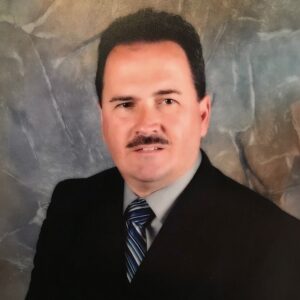
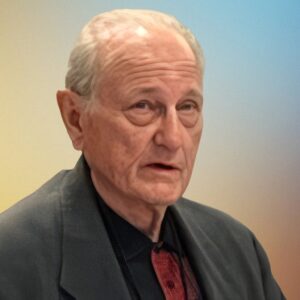
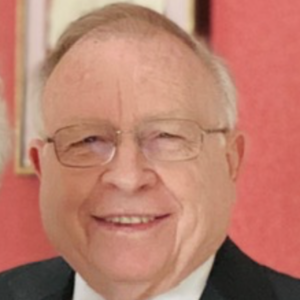
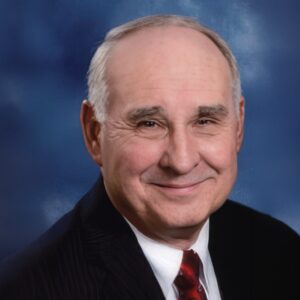
The White Rock Fund is governed by volunteer trustees and advised by faithful Christians who bring experience, wisdom, and a shared commitment to the mission of the Fund.
Meet Our Trustees and Advisors
- Jeff Banks
- Mac Brockman
- Brian Bush
- Anthony Castillo
- Monica Clark
- Kelly Elander
- Kevin Keim
- Maria Joyce
- Park Linscomb
- Bob Nienstadt
- Norman Patten
- Curtis Taft
- David Tarbet
- Paula Tarbet
- Larry Taylor
Advisors to The White Rock Fund
- Truitt Adair
- Craig Friesland
- Rusty Justice
- Chip Langston
- Judith Mayerhofer
- Phillip Sanders
- Tommy South
- Timothy Tarbet
- John P. Wiegand











FAQs
What is the purpose of The White Rock Fund?
The White Rock Fund provides funding to Churches of Christ for mission opportunities in the Northeast United States and around the world.
Who contributes to the Fund?
The White Rock Fund is supported by individual Christians working together to advance mission work. Contributions are not solicited from church budgets, although some congregations choose to support the Fund voluntarily.
How is the money managed?
The Fund’s assets are managed by Strategic Financial Planning, Inc. in Plano, Texas. The principal is invested, and the income generated is distributed as grants to Churches of Christ to support gospel preachers around the world. Each year, a significant percentage of the Fund’s net value is designated for grants.
Who receives the grants?
Grants are provided to Churches of Christ for mission efforts, with priority given to evangelizing major population centers.
Where are the grants used?
Sixty percent of grants may be used for teaching anywhere in the world. Forty percent are designated specifically for densely populated areas of the Northeastern United States — the nation’s most underserved domestic mission field. One in every five persons living in the United States lives in the Northeastern states. That is 60,000,000 souls.
What about doctrinal soundness?
Recipients of grants must affirm Bible teachings that identify the New Testament Church as described in the Fund’s “Statement of Faith.” Safeguards are in place to ensure the Fund’s assets continue to be used to teach biblical truth.
Who are the Trustees?
The Fund’s Trustees are active members of Churches of Christ. Many serve or have served as elders, preachers, and Bible teachers. Faithful Christians from across America also serve as advisers.
Are there tax advantages to giving?
Yes. The White Rock Fund is a 501(c)(3) nonprofit organization, and contributions are tax deductible in the same way as contributions made to a church. Here are some ways to give.
Is there an annual audit?
Yes. Still Burton, LLP, an audit and tax firm in Dallas, Texas, conducts an annual audit of The White Rock Fund.
Help Share the Gospel for Generations to Come
Your support helps provide resources for evangelism, missions, church growth, and biblical teaching. Whether through a one-time contribution, recurring gift, or planned giving opportunity, your generosity helps extend the reach of the gospel far beyond what any individual could accomplish alone.
- The Trustees of The White Rock Fund
- P.O. Box 180274
- Dallas, Texas 75218